













Lovely place to work and learn on how space data can make a better life for us
Haven't used ESA/ESRIN yet?
Ask Trustburn
What reviewers say about ESA/ESRIN
Customers generally describe ESA/ESRIN very positively, highlighting it as a lovely and interesting place to visit or work, praising the impressive facilities, and noting its value as a learning hub for Earth Observation and space-related science.
What is ESA/ESRIN?
ESA/ESRIN is the Italian center of the European Space Agency, established in 1975, where more than 6,000 engineers, scientists, and support staff work across laboratories, Europe's largest test centre, control rooms, and offices throughout Europe.
Who is the ideal visitor for ESA/ESRIN?
The center serves as a hub for Earth observation programs and is open to the public every year for science night events, allowing visitors to expand their knowledge on satellite data and the analysis of data.
What do reviewers praise about the location?
Reviewers describe the location as lovely and personal, with a nice atmosphere where science and technology meet to create the future, making it a top destination for space or remote sensing enthusiasts.
What are the common complaints or specific details from reviews?
Some reviewers note that the position on Google Maps is wrong, while others mention that the canteen food is very tasty, highlighting specific aspects of the visitor experience.
How recent are the reviews and what is the rating?
The center has a Trustburn rating of 4.7 out of 5 from 18 reviews, with the most recent feedback dating back to December 2020, showing a strong positive sentiment overall.
What specific themes do reviewers highlight in their praise?
Visitors describe the experience as wonderful, magnificent, and a life experience, with some noting it is an energetic place and the best for learning Earth Observation and studying ESA activities.
Where is ESA/ESRIN located and how does it fit into the broader network?
The center is part of a network of establishments across Europe and beyond, including French Guiana, and serves as a key node for international cooperation in space exploration.
What specific missions or projects are associated with the center?
The center is involved in major missions such as Euclid, which lays the foundation for a best-ever 3D map of the Universe, and MTG-I2, which delivers weather satellite images.
How is the center organized and who leads the Earth observation efforts?
The center is led by a Director of Earth Observation Programmes and operates under a matrix management structure that ensures specialized expertise is shared across all ongoing programmes and missions.
What specific resources and services does the center provide?
The center provides resources and services that include people, capabilities, infrastructure, technology, security, and organizational support to allow ESA's programmes and missions to succeed.
How does the center engage with future generations and educational institutions?
The center works with schools, universities, and research institutions to inspire future generations, promote STEM-related studies, and offer learning opportunities through its Education Office and outreach activities.
What is the primary goal or impact of the center's work?
The center is described as a place where space data can make a better life for us, emphasizing the practical benefits of its work in monitoring and acting on our changing world.
How can visitors engage with the center outside of regular visits?
The center is open to the public annually for science night events, and visitors are encouraged to check the dates on the website for these special occasions.
What is the overarching mission of the center within the European Space Agency?
The center is part of the European Space Agency's strategy to elevate the future of Europe through space for the benefit of citizens, society, and our planet.
What recent planetary defence activities has the center been involved in?
The center is involved in the Hera mission for planetary defence, which acquired its first close-up view of the Didymos binary asteroid system following NASA's DART spacecraft impact.
Post your question publicly — other visitors, and whoever manages this page, can answer. It will be visible on this page.
Want to hear about this company again? Follow it and we’ll email you when a new review appears.
Based on reviews, listing data and the company's website. Verify anything important with the company directly.
18 Reviews
The best place for learning Earth Observation and studying activities of the European Space Agency
Italian center of the European Space Agency, responsible for the Earth observation program.
It is open to the public every year for science night, check the dates on the website
One of the best experience i have in my life. The place is super cool it worth visiting lab and expand your knowledge on satellite data and what you can achieve with the analysis of the data. Canteen food very tasty
Nice atmosphere, place to visit if you are space or remotr sensing geek :)
A place where science and technology meet to create the future.
Questions & Answers
No questions yet — be the first to ask.
Sign in to post
Your text is saved — you'll come right back to post.

or with email
Don't have an account? Create one
News & Press
No news yet. This is where the business shares its own updates and press.
Photos
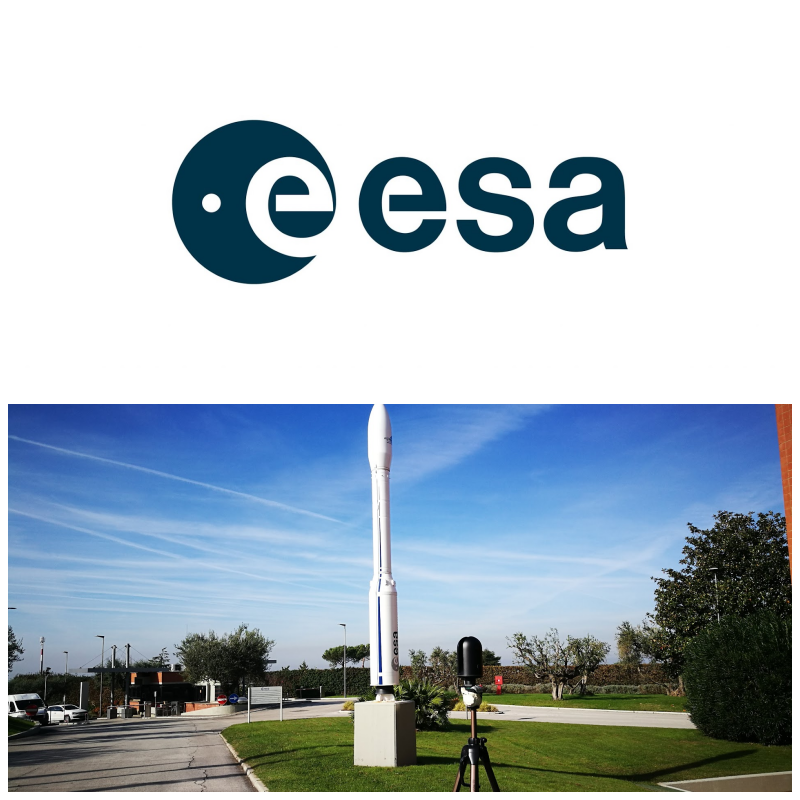
About ESA/ESRIN
The European Space Agency portal features the latest news in space exploration, human spaceflight, launchers, telecommunications, navigation, monitoring and space science.
ESA/ESRIN: Exploring the Final Frontier
The European Space Agency (ESA) is an intergovernmental organization dedicated to exploring space and advancing our understanding of the universe. With headquarters in Paris, France, and a number of facilities across Europe, ESA is at the forefront of space exploration and technology development.
One of ESA's key facilities is ESRIN (European Space Research Institute), located in Frascati, Italy. ESRIN serves as ESA's center for Earth observation activities and hosts a range of scientific research projects related to climate change, natural disasters, land use monitoring, and more.
At its core, ESA's mission is to push the boundaries of human knowledge through space exploration. From launching satellites that monitor our planet's health to sending probes deep into our solar system to study other planets and moons, ESA has been instrumental in expanding our understanding of the universe around us.
Human spaceflight has also been a major focus for ESA over the years. The agency has sent astronauts on missions to live aboard the International Space Station (ISS), conduct experiments in microgravity environments, and even explore other planets like Mars.
But it's not just about exploring new frontiers - ESA also plays a critical role in developing technologies that benefit life on Earth. From telecommunications satellites that enable global communication networks to navigation systems that help us get around more efficiently, many aspects of modern life are made possible by innovations developed by ESA scientists and engineers.
In recent years, there has been growing interest in commercializing space activities - from launching private satellites for communications or imaging purposes to developing new technologies for asteroid mining or lunar tourism. As one of the world's leading space agencies with decades of experience under its belt, ESA is well-positioned to play a key role in this emerging industry.
Overall, if you're interested in staying up-to-date on all things related to space exploration - from cutting-edge scientific discoveries to exciting new technological developments - then be sure to check out the European Space Agency portal regularly!
- Website
- esa.int
- Categories
- Defense & space
People also looked at
 Corona Formal Clothiers7 Reviews
 Coldwell Banker Of The Valley11 Reviews
 Advanced Mortgage100 Reviews
 Myrtle Beach Tours117 Reviews
 Ayden Golf and Country Club46 Reviews
 Broderville Pictures11 Reviews
 Gamboa Rainforest Resort1,106 Reviews
 Evoworks10 Reviews
 CareerValue B.V.44 Reviews
